

What It Is
Manus Skills are modular, file-system-based resources that encapsulate a specific capability or workflow. Think of them as a detailed set of instructions or an “onboarding guide” that you can give to your Manus agent, enabling it to perform specialized tasks with precision and consistency. By loading a Skill, you provide the agent with the necessary context, procedural knowledge, and tools to excel in a particular area, from financial analysis to branded content creation. The core advantages of using Skills are:- Specialization: Customize your agent’s capabilities for specific domains, tailoring its knowledge and behavior to your unique needs.
- Reusability: Capture a successful workflow once and reuse it across multiple sessions and projects, ensuring consistent results and saving time.
- Composability: Combine multiple Skills to construct powerful, automated workflows capable of handling complex, multi-step processes.
How to Use It
Integrating Skills into your workflow is a straightforward process, from adding new capabilities to invoking them in your conversations with Manus.
Accessing and Managing Your Skills
You can manage your Skills through the Manus interface. Navigate to the Skills tab in the main menu on the left-hand side of your screen. This will open the Skills management page, where you can view your installed Skills, search for new ones, and add them to your workspace.Adding New Skills
Manus provides several ways to add Skills to your library. On the Skills page, click the + Add button to reveal the following options: Build with Manus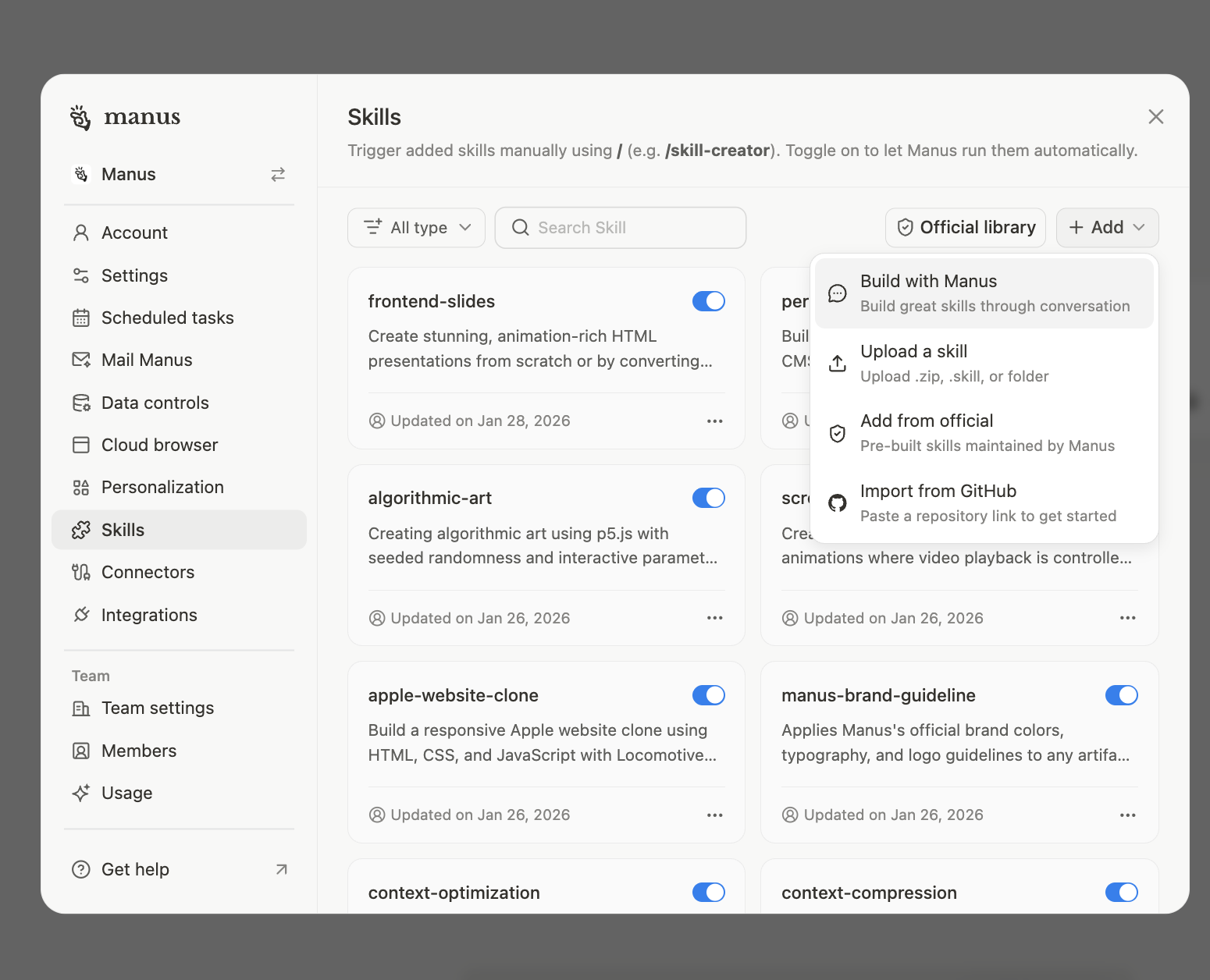
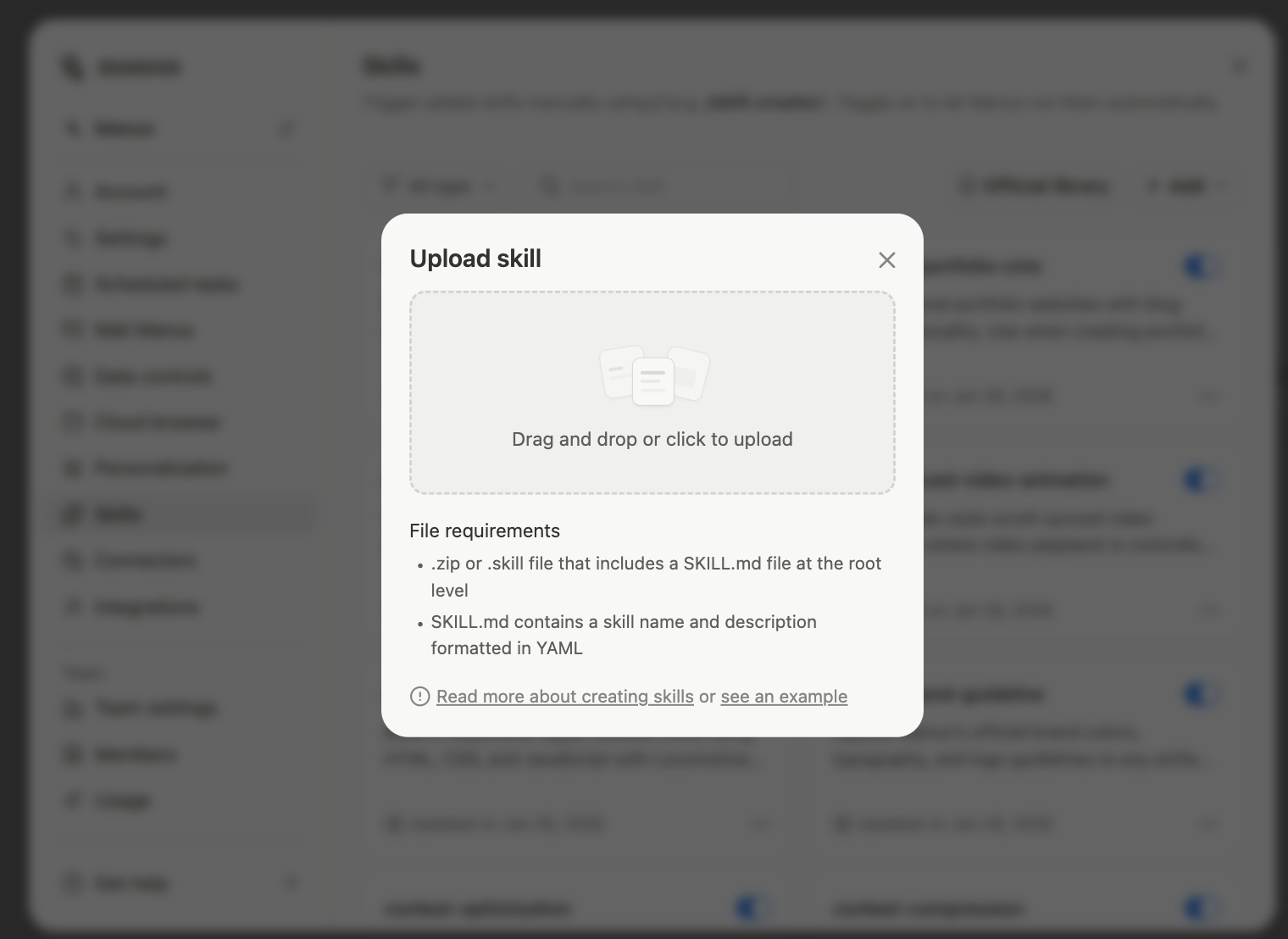
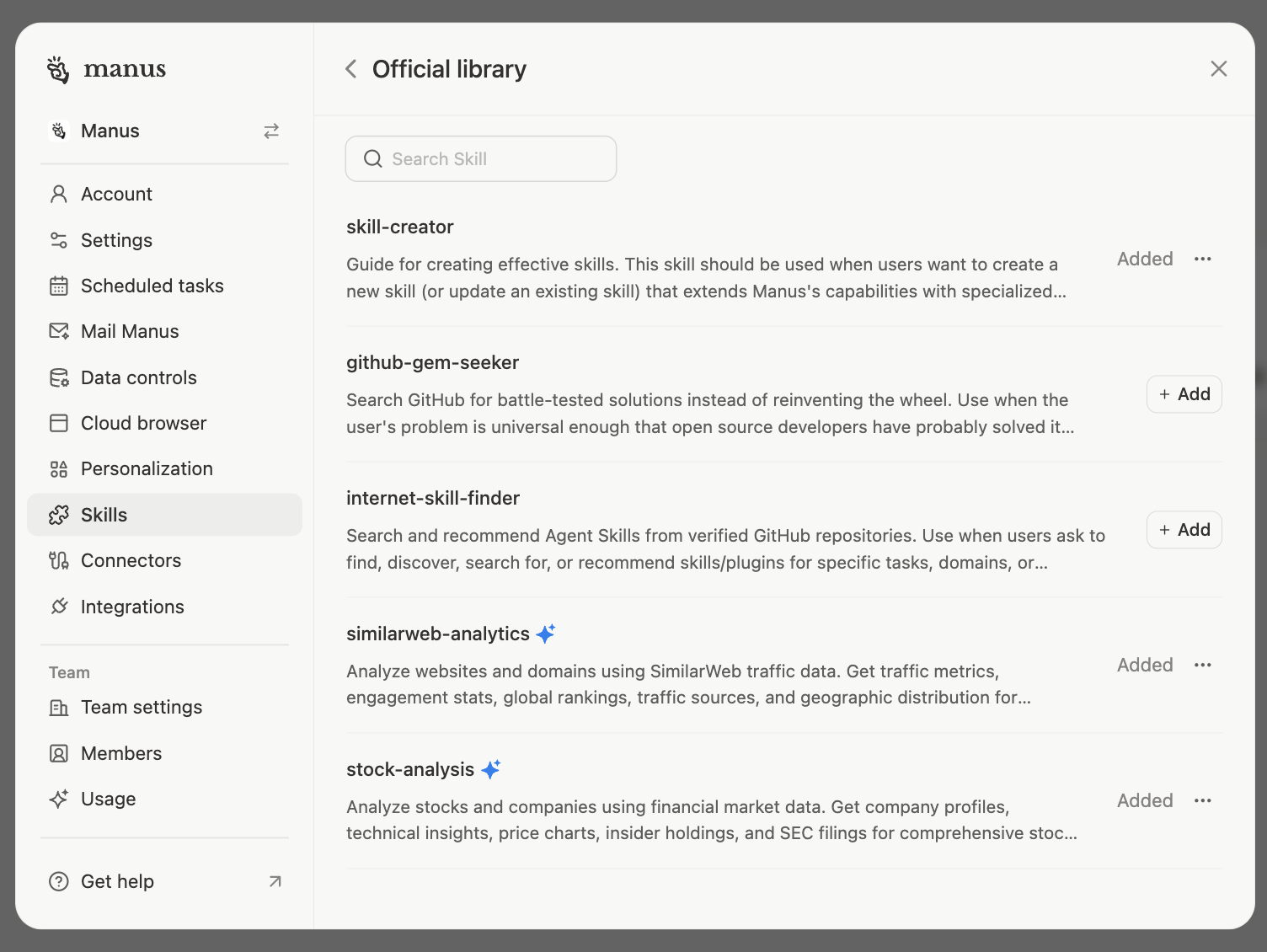
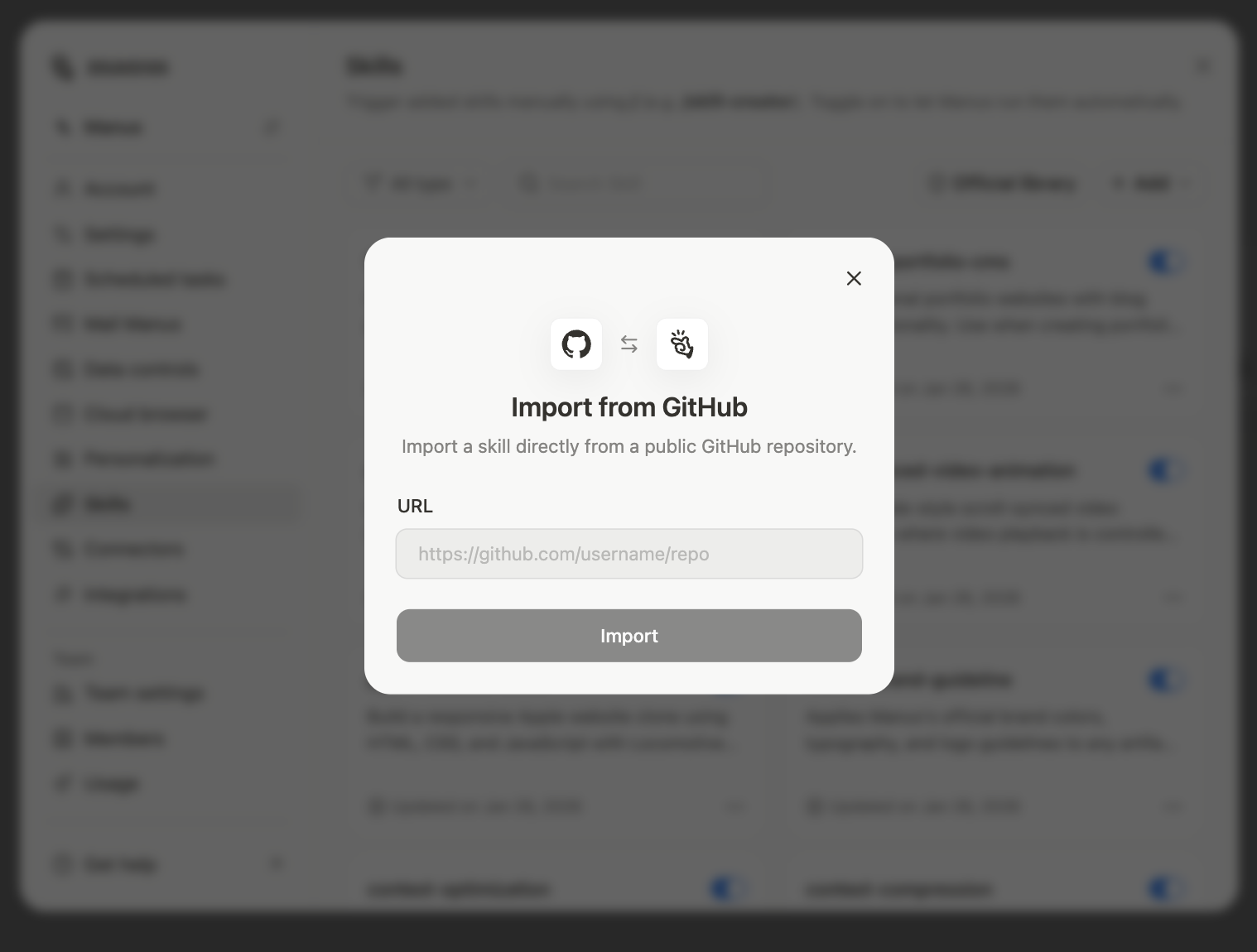
Using a Skill in a Chat
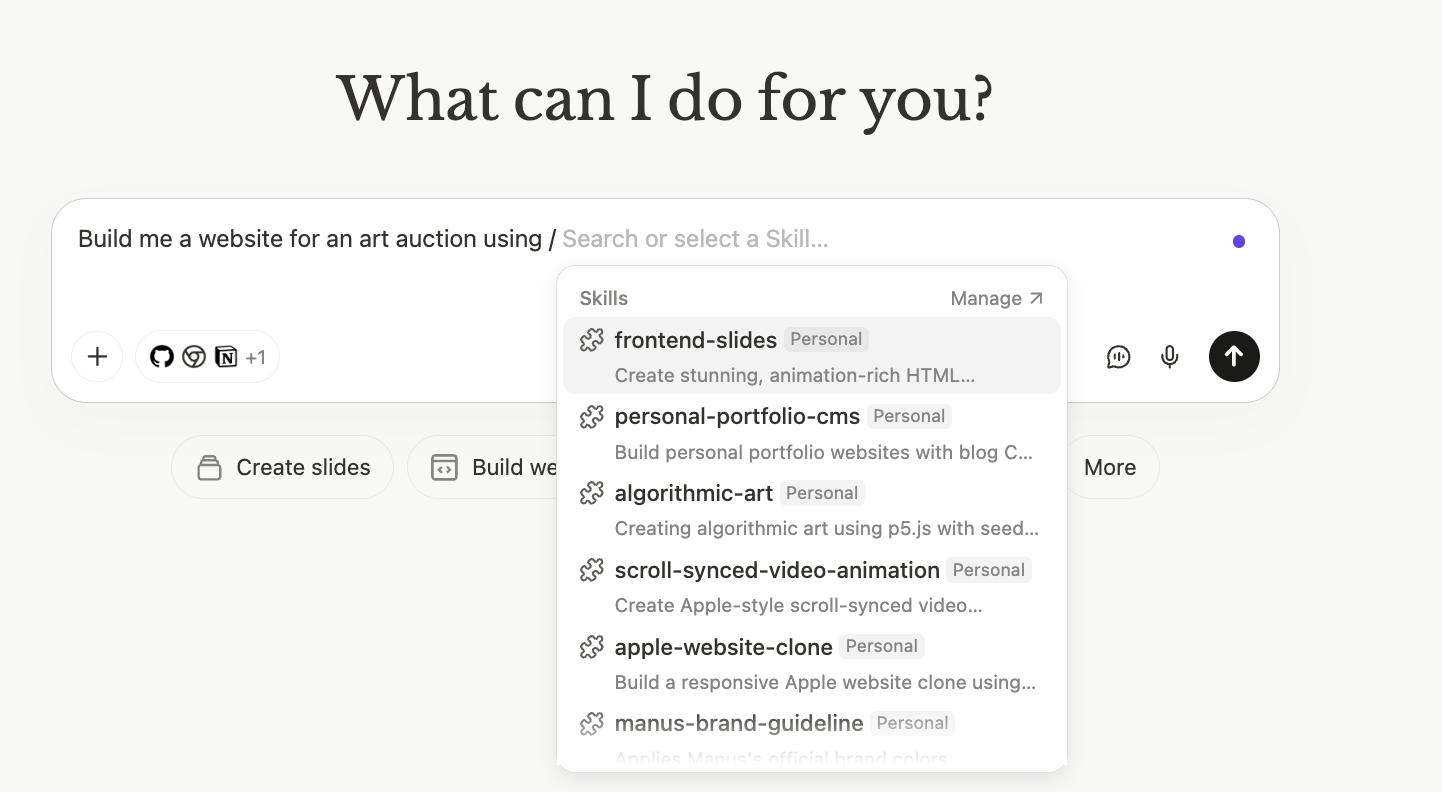
What You Need to Know
To make the most of Skills, it’s important to understand a few key concepts regarding their security and efficiency.Verifying Community Skills
While the community is a fantastic source of powerful Skills, it is crucial to verify their contents before use, as they can contain code and shell commands. Manus provides a transparent way to audit a Skill. Before using a new Skill, you can ask Manus to review it for you: Mans will perform a detailed analysis, explaining the Skill’s functionality and flagging any potentially risky operations, allowing you to use community-built Skills with confidence.Progressive Disclosure for Efficiency
Skills are designed to be highly efficient by using a “Progressive Disclosure” mechanism. This ensures that the agent only loads the information it needs, when it needs it, preserving the valuable context window. The content of a Skill is structured into three levels:Tips
FAQ
Can I edit a Skill after I create it?
Can I edit a Skill after I create it?
Yes. Since Skills are file-based, you can edit the SKILL.md file and any associated scripts to refine or update the workflow as needed.
What is the difference between a Skill and the Model Context Protocol (MCP)?
What is the difference between a Skill and the Model Context Protocol (MCP)?
They are complementary technologies. MCP focuses on creating standardized “data pipelines” to connect to external data sources like Gmail or Notion. Skills, on the other hand, provide the “operating manuals” or workflows that can leverage those pipelines to perform complex tasks.
Where can I find Skills built by the community?
Where can I find Skills built by the community?
You can ask Manus to search GitHub for open-source Skills. We will also be launching a dedicated Manus Skills website in the future to serve as a central hub for the community.